
How many portable restrooms does a marathon need?
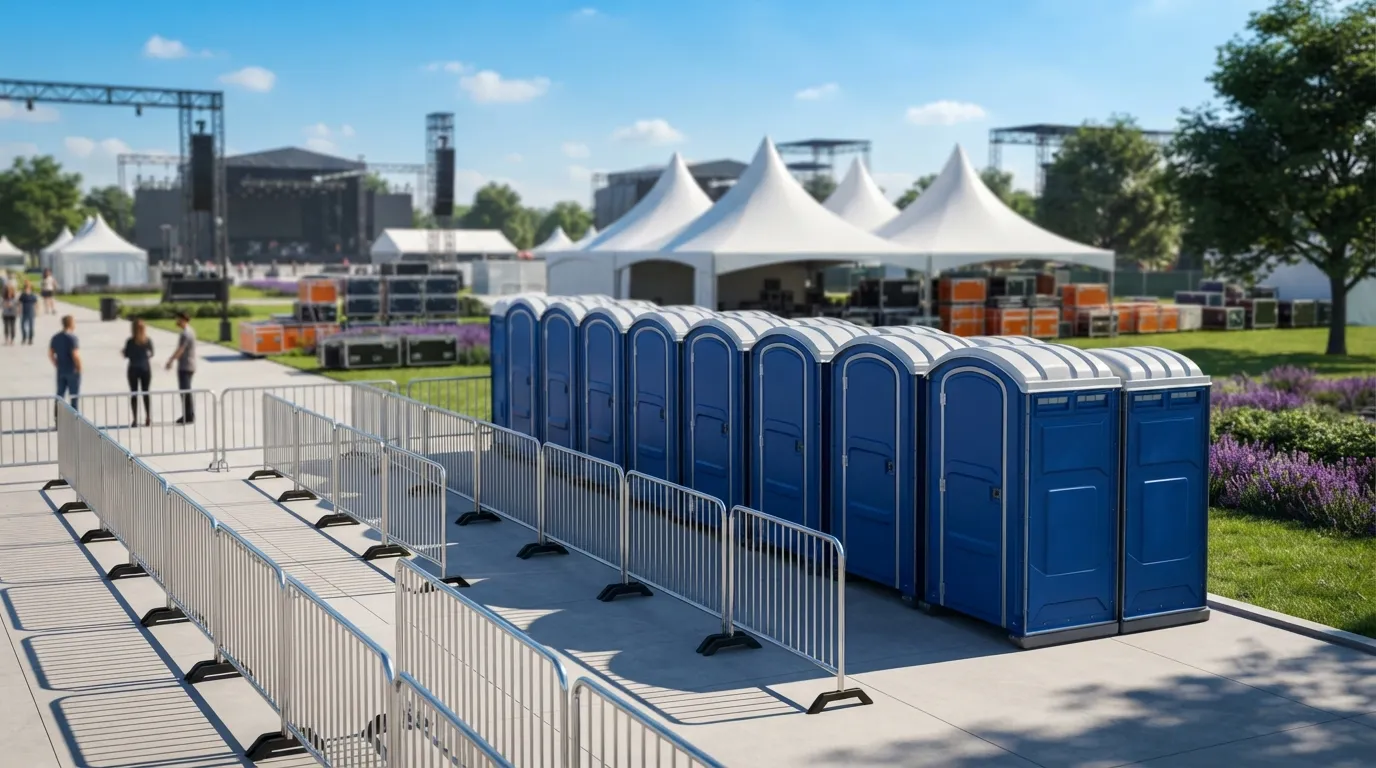
Start with the OSHA 1926.51(c) baseline: 1 toilet for every 20 people at a fixed worksite, then adjust up because a race course is not a fixed worksite. Runners cluster at the start corral, the finish chute, and every aid station in between, so Corona Porta Pros spreads units instead of centralizing them. For a 5K with 300 runners, four to six standard porta potty rentals near the start and finish usually covers it. A full marathon route through Corona with multiple aid stations needs units staged every mile or two, not just at the ends. Spectator zones add their own demand, especially near finish-line bleachers where families wait an hour or more. If your event pulls a run-walk crowd with slower back-of-pack finishers, plan for units to stay serviced longer into the afternoon. Race directors who want the math done for them can run the numbers with our how many porta potties do I need guide before requesting a quote. We also recommend at least one ADA accessible porta potty per cluster, consistent with ADA Standards 213.2, which calls for 5 percent of clustered single-user units to be accessible with never fewer than one. A 60 inch turning space per ADA Standards 304.3.1 matters at busy aid stations where wheelchair racers and handcycle athletes need clear room to maneuver.
Where should restrooms go along the course?
Bad placement wastes a rental fleet. Units belong at the start corral, every aid station, the finish chute, and any spectator viewing area with a real crowd, not just where a truck can park easiest. Our porta potty placement guide covers ground stability and clearance, both of which matter more at a race than a construction site because you cannot fence off a muddy shoulder mid-event. ADA Standards 302.1 calls for stable, firm, slip-resistant surfaces, which rules out soft turf or loose gravel for accessible units. Delivery trucks need real room too: a roll-off or trailer delivery typically needs about 60 feet of straight clearance behind the vehicle, so staging near narrow park access roads takes planning ahead of race morning. If your course runs a loop through a venue with limited power, you may also need a temporary power pole for timing equipment, PA systems, or medical tents. Bracing that pole correctly matters, and knowing how to brace a temporary power pole comes down to the same basics every time: guy-wire it at multiple angles, anchor the base plate, and keep it clear of the runner lane so a gust or a jostled cable does not bring it down mid-race. Pair that with a light tower rental for pre-dawn starts or late finish lines, and confirm any GFCI protection on temporary circuits per OSHA 1926.404(b)(1)(ii) if crews are running powered equipment near the restroom cluster. For events near Norco, 5.2 miles north of Corona, or Eastvale, 8.7 miles north, we run the same placement standard across each course.
What amenities do runners and spectators expect?
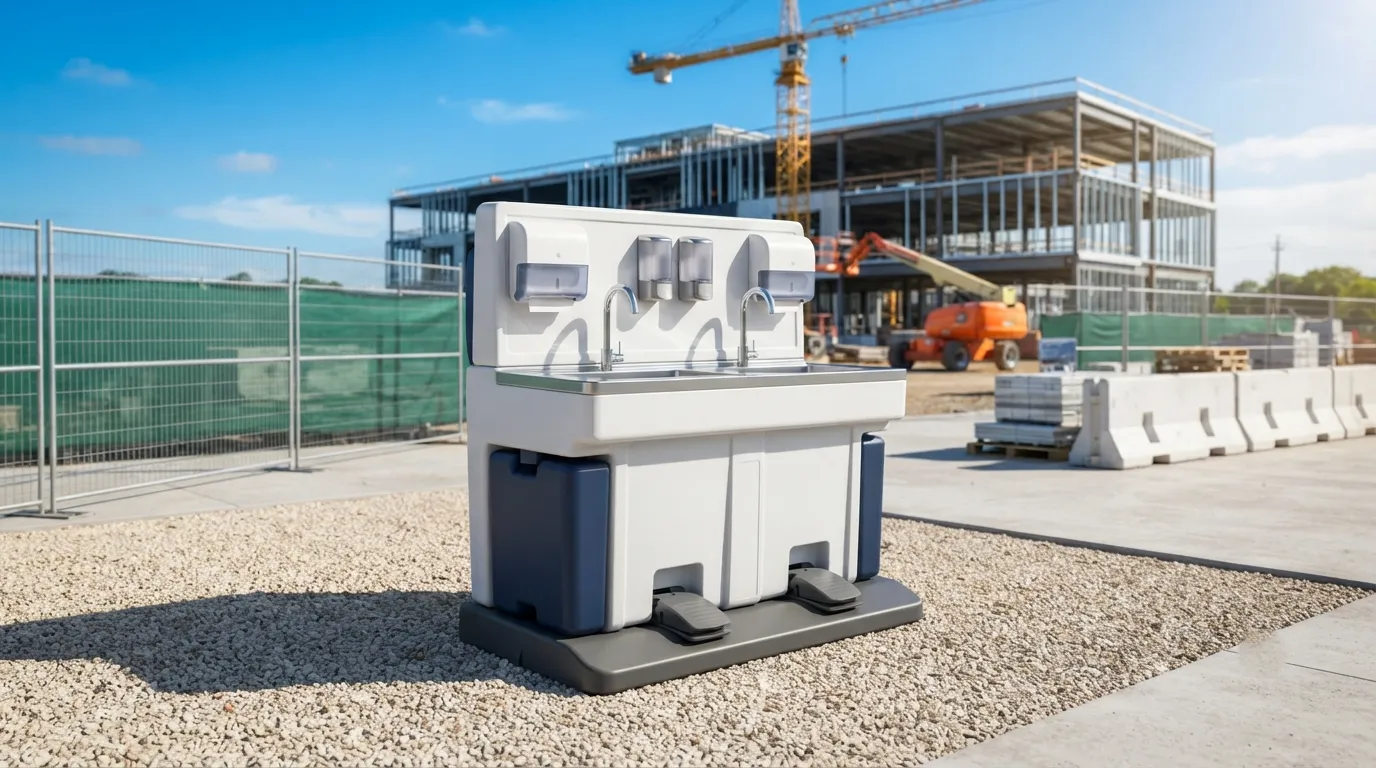
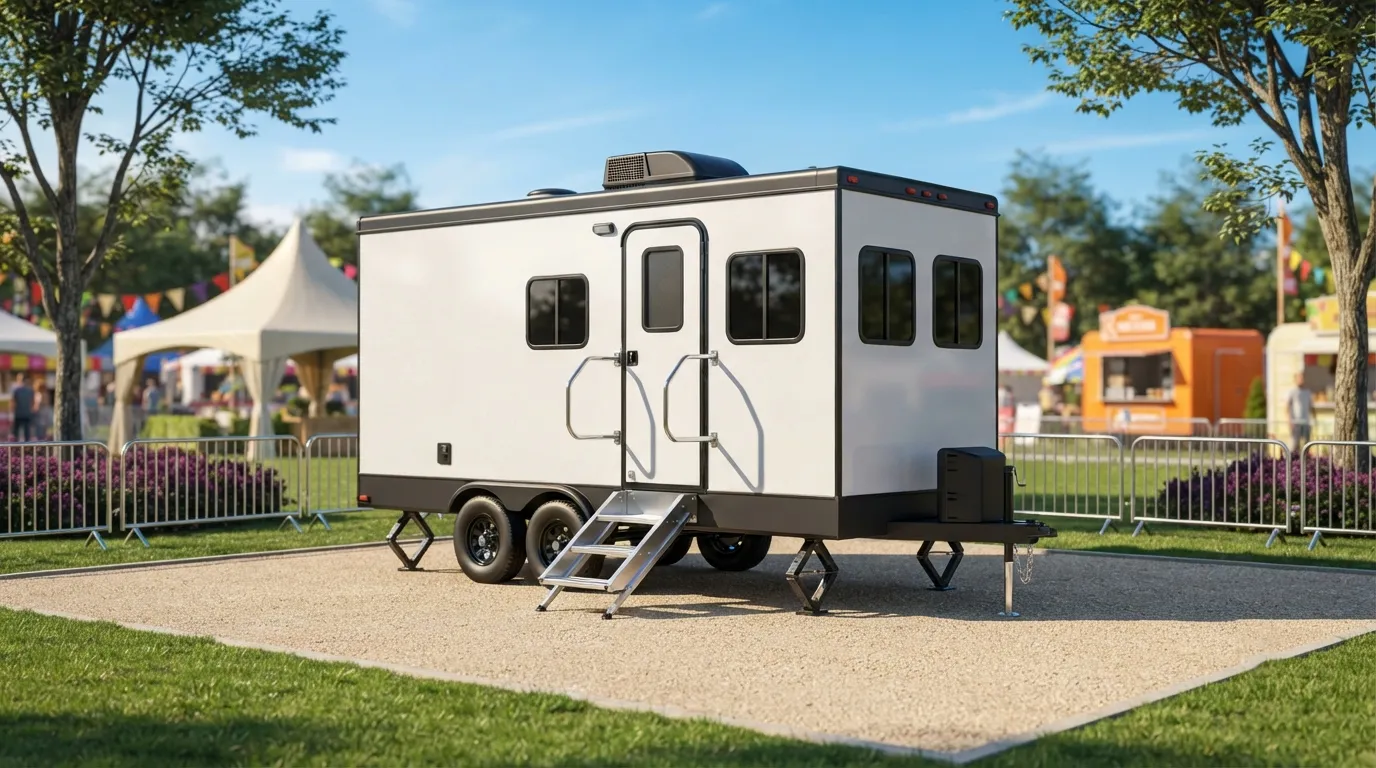
Standard units cover the bulk of the course, but finish-line areas benefit from something nicer. A deluxe flushable porta potty at the finish chute gives tired runners a real flush and a sink, which matters after a few hours on pavement. Larger races with VIP tents or sponsor hospitality areas often add a restroom trailer rental, and a 2 stall restroom trailer handles a moderate crowd without the line buildup of single units. Handwashing matters too: 29 CFR 1910.141(d)(2) requires soap and towels or a hand-drying device, not hand sanitizer alone, so we pair units with a handwashing station rental at aid stations where runners grab food. If your race runs through Coronita, 4.7 miles west of Corona, or out toward Jurupa Valley, 16.5 miles northeast, we still hold to the same servicing schedule, which follows the ANSI/PSAI Z4.3 baseline of one service visit per week for lighter use, tightened to daily or twice-daily for race-day volume. Crowd control barriers near restroom clusters keep queue lines organized; see our crowd control barrier rental page for options. For post-race cleanup, a roll-off dumpster rental handles cups, gel packets, and banner material fast.
Frequently asked questions
How far in advance should I book race restrooms?
Book as soon as your course map and expected headcount are set. Race weekends compete with weddings and festivals for the same fleet, and standard units run 130 to 500 for a week-long hold depending on count and duration. Earlier bookings get better placement flexibility across multiple aid stations.
Can I get restrooms for a one-day race only?
Yes. Daily standard rentals run 100 to 350 depending on unit type and delivery distance, which fits most single-day marathons and 5K events. Request a quote through request a quote and we will match the count to your course length.
Do I need ADA units for a race?
Yes, if units are clustered for public use. ADA Standards 213.2 requires at least one accessible unit per cluster, never fewer, at 5 percent of the group. See ADA restroom requirements for full detail on placement and access.
What is the cost difference between event and weekend rentals?
Event-rate standard units run 200 to 800 depending on scale and duration, while a straight weekend rate runs 125 to 400. Full pricing breakdowns live on our porta potty rental cost page.
Do you service units during a multi-hour race?
Yes, servicing is built into race-day scheduling for high-traffic aid stations and finish areas. Check our how often are porta potties cleaned page for the standard interval and how race-day frequency differs from a construction site.
Next step
Get a delivery date
Tell us the address, the dates and the headcount. We size the order and confirm the route.