
What Does ADA Require For Portable Restrooms?
The core rule is simple: cluster of portable toilets, at least one has to be accessible, and that number never rounds down to zero. ADA Standards 213.2 sets that 5 percent floor. Inside the unit itself, ADA accessible porta potty models are built around a few hard numbers. The door opening has to clear 32 inches per ADA Standards 404.2.3, and the interior needs a 60 inch turning circle under ADA Standards 304.3.1, which is why these units read noticeably bigger than a standard porta potty rental. Reach ranges matter too: controls and dispensers need to sit within 48 inches high and no lower than 15 inches, per ADA Standards 308.2.1. Grab bars, flush handles and locks all need to work one-handed, without tight grasping or twisting, and take no more than 5 pounds of force to operate, per ADA Standards 309.4. If you're staging a wedding, festival, or fundraiser in Corona and renting a small cluster, run the count past our how many porta potties do I need guide before you lock the order, because the accessible-unit math has to happen before delivery, not after.
How Many Accessible Units Does A Job Site Need?
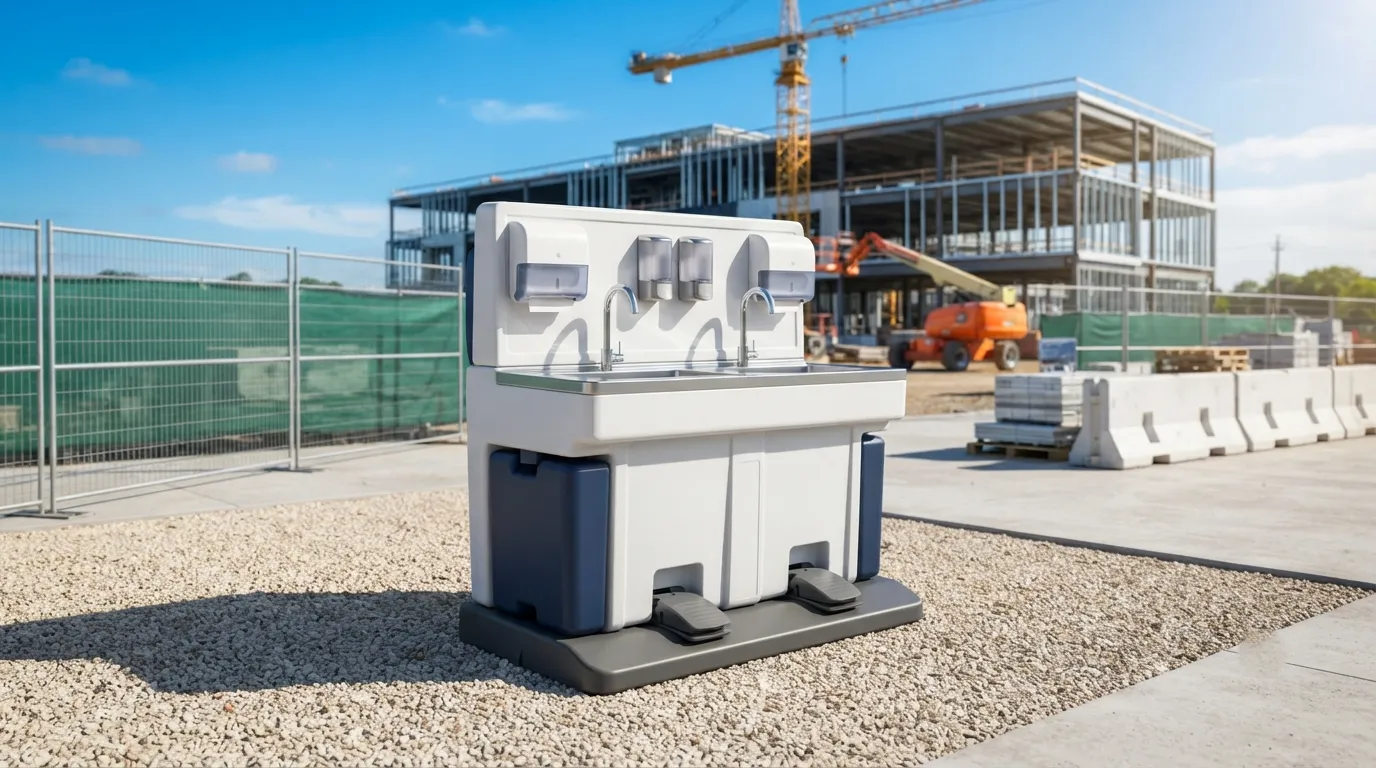
Start with your total toilet count under OSHA 1926.51(c), then apply the ADA percentage on top of it. OSHA sets the baseline: one toilet facility for 20 workers or fewer on a construction site, scaling up as headcount grows. ADA Standards 213.2 then requires 5 percent of whatever that total is to be accessible, rounded up, never down to zero. A crew of 20 in Corona still needs one accessible unit even though the math produces a fraction. Larger crews multiply from there. If you're running a construction site services job with 60 or more workers spread across a site, that could mean two or three accessible units mixed into the fleet, not one bolted on as an afterthought. Pair that count with a porta potty placement guide early, since accessible units need a level, stable approach and can't just get dropped wherever there's room. Ground surfaces have to be stable, firm and slip resistant under ADA Standards 302.1, which rules out loose gravel or soft dirt as a landing pad.
What Ground Access Do Accessible Units Need?
The approach path is where most placements fail inspection, not the unit itself. A minimum 36 inch clear width has to run the whole route, per ADA Standards 403.5.1, and if there's any grade change, a ramp can't exceed a 1:12 slope under ADA Standards 405.2. That's a foot of ramp for every inch of rise, which adds up fast on a sloped lot. In practice, that means placing the accessible unit somewhere within reasonable reach of parking or the main path, not tucked behind equipment or across loose fill. Our porta potty placement guide covers the layout side in more depth, and it's worth checking before delivery day if your Corona site has any slope at all. For events, this same rule applies at wedding restroom rental and festival restroom rental sites, where accessible units often need their own dedicated path separate from the general foot traffic pattern. If you're adding an ADA accessible porta potty to a restroom trailer rental package, the same ground rules apply to whichever stall is designated accessible.
Do ADA Restroom Requirements Apply To Rentals Or Just Permanent Buildings?
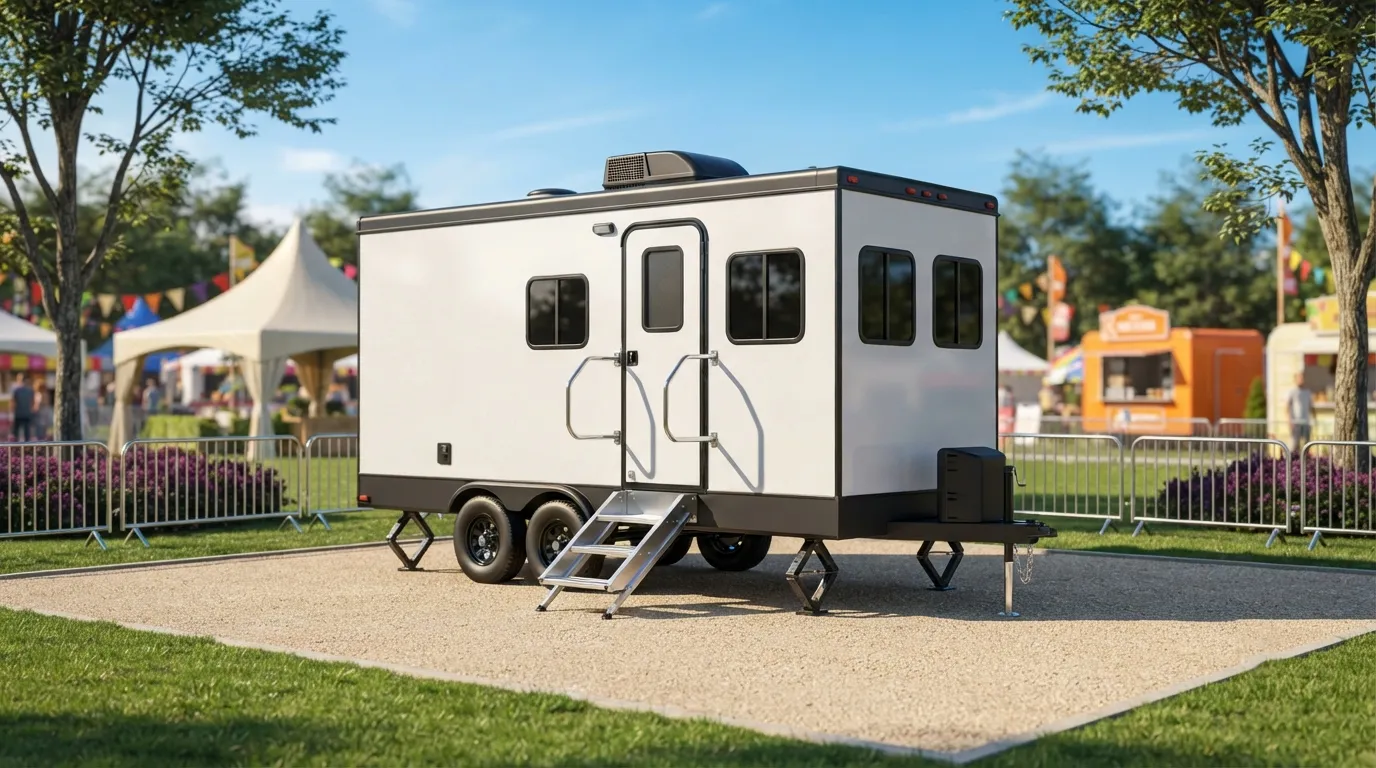
Yes, they apply to rentals. ADA Standards 213.2 doesn't distinguish between a permanent restroom and a portable unit dropped for a weekend. Any time you cluster portable toilets for public or worker use in Corona, the accessible-unit ratio applies the same way it would at a fixed building. That covers everything from a single-day event restroom rental to a months-long construction site services contract. It also applies to trailer-style restrooms: an 8 stall restroom trailer or 4 stall restroom trailer still needs at least one ADA-compliant stall inside it, meeting the same door, reach and turning-circle numbers. Pricing for accessible units runs a bit above standard rentals because of the larger footprint and hardware, which our porta potty rental cost page breaks out separately from standard pricing.
| unit | duration | low | typical | high |
|---|---|---|---|---|
| ada | day | 200 | 230 | 400 |
| ada | week | 120 | 185 | 240 |
For weekend events, ADA unit pricing typically lands near the day rate, so budget accordingly rather than assuming a discount for the shorter booking. Compare that against porta potty rental per day or a monthly porta potty rental if your job runs longer.
Is one ADA unit enough for a small event?
For most small events, yes, one accessible unit satisfies ADA Standards 213.2 as long as your total toilet count is small enough that 5 percent rounds to one. Once you scale past a handful of units, the math produces more than one required accessible stall.
Can a standard porta potty be relabeled as accessible?
No. A standard unit is about 44 by 48 inches on the ground and doesn't meet the 60 inch turning circle or 32 inch door width ADA requires. Accessible units are built to different dimensions from the start.
Does a construction site need ADA units if it's small?
Yes, size doesn't exempt a site. Even a crew of 20 under OSHA 1926.51(c) still needs one accessible unit under ADA Standards 213.2, since the rule never rounds down to zero.
Where should the accessible unit go on site?
Place it along a route at least 36 inches wide with stable, slip resistant ground, per ADA Standards 302.1 and 403.5.1. Avoid gravel, soft dirt or any ramp steeper than 1:12 under ADA Standards 405.2.
How much more does an ADA unit cost than standard?
ADA day rentals run higher than standard day rentals, reflecting the larger unit and required hardware. Check porta potty rental cost for the current comparison before booking through Corona Porta Pros.
Next step
Get a delivery date
Tell us the address, the dates and the headcount. We size the order and confirm the route.