
Where should a porta potty go on a job site or event lot?
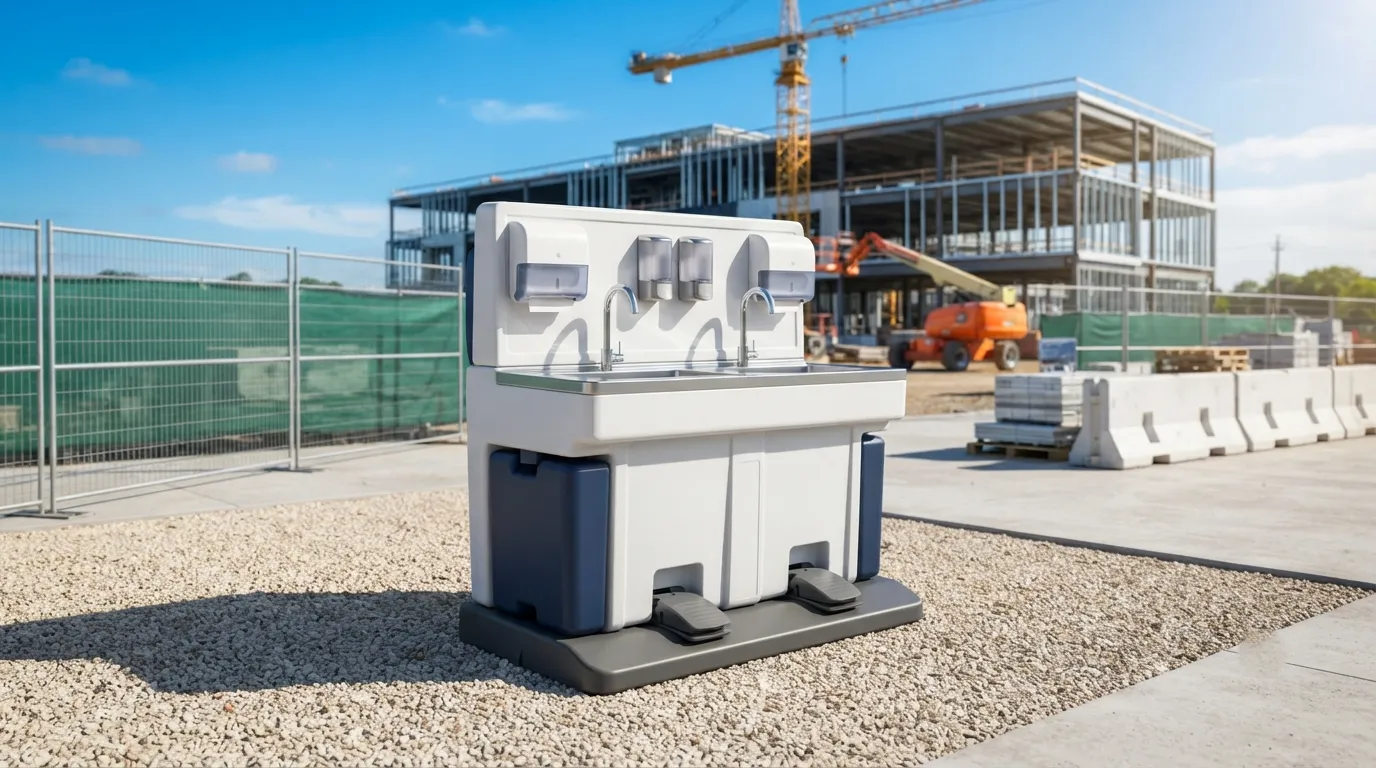
Pick flat ground first. A standard porta potty rental is about 44 by 48 inches on the ground and stands roughly 92 inches tall, so give it clear headroom and a footprint wider than the unit itself for the door swing. Keep units within a reasonable walk of the work area, but not so close that dust or debris from a construction dumpster rental blows onto the door. Corona sites with slope should use the low end of the lot so service trucks are not backing uphill. If you are placing an ADA accessible porta potty, ADA Standards section 302.1 requires the ground surface be stable, firm and slip resistant, which rules out loose gravel or wet grass. Pair placement with a handwashing station rental nearby, and if the unit uses an Ozark River portable sink and a part wears out, replacement parts are available rather than needing a full unit swap. Check the porta potty rental checklist before delivery day so the pad is graded and clear.
Do I need a permit to place a porta potty or dumpster in Corona?
Placement in a driveway or private lot usually does not need a permit, but anything set in the public right of way, on a street or sidewalk in Corona, needs confirming with the city before delivery. The same holds for a roll-off dumpster rental: a dumpster placement permit, and any dumpster placement permit cost, varies by exactly where the container sits, and we cannot quote a number here without checking with the city on your specific address. Review dumpster permit requirements and porta potty permit requirements before you commit to a spot on a public curb. A roll-off delivery also needs about 60 feet of straight clearance behind the truck to set the container down safely, which rules out tight alleys and cul-de-sacs with parked cars. If your project also needs a mobile office trailer rental, note that units with damaged doors get swapped rather than repaired on-site; a trailer with a broken door does not meet code for a working job trailer.
How many units do I need and how far apart should they be?
OSHA 1926.51(c) sets the ratio for construction sites: 1 toilet for 20 workers or fewer, then 1 toilet and 1 urinal per 40 workers up to 200, then one per 50 beyond that. Use the how many porta potties do I need guide to run your headcount, and see OSHA portable toilet requirements for the full breakdown. For crews using paints, coatings or solvents, OSHA 1926.51(f)(1) requires washing facilities separate from the toilet count, so budget a portable sink rental as its own line item, not a substitute. ANSI/PSAI Z4.3 sets the baseline service interval at once a week for up to 10 users over a 40 hour week, so spacing units close enough for the service truck to reach every one on schedule matters as much as spacing them apart for users. On a large lot, cluster units in twos rather than spreading them thin, since ADA Standards section 213.2 requires at least 5 percent of a cluster be accessible, with a minimum of one.
What clearance does ADA placement need?
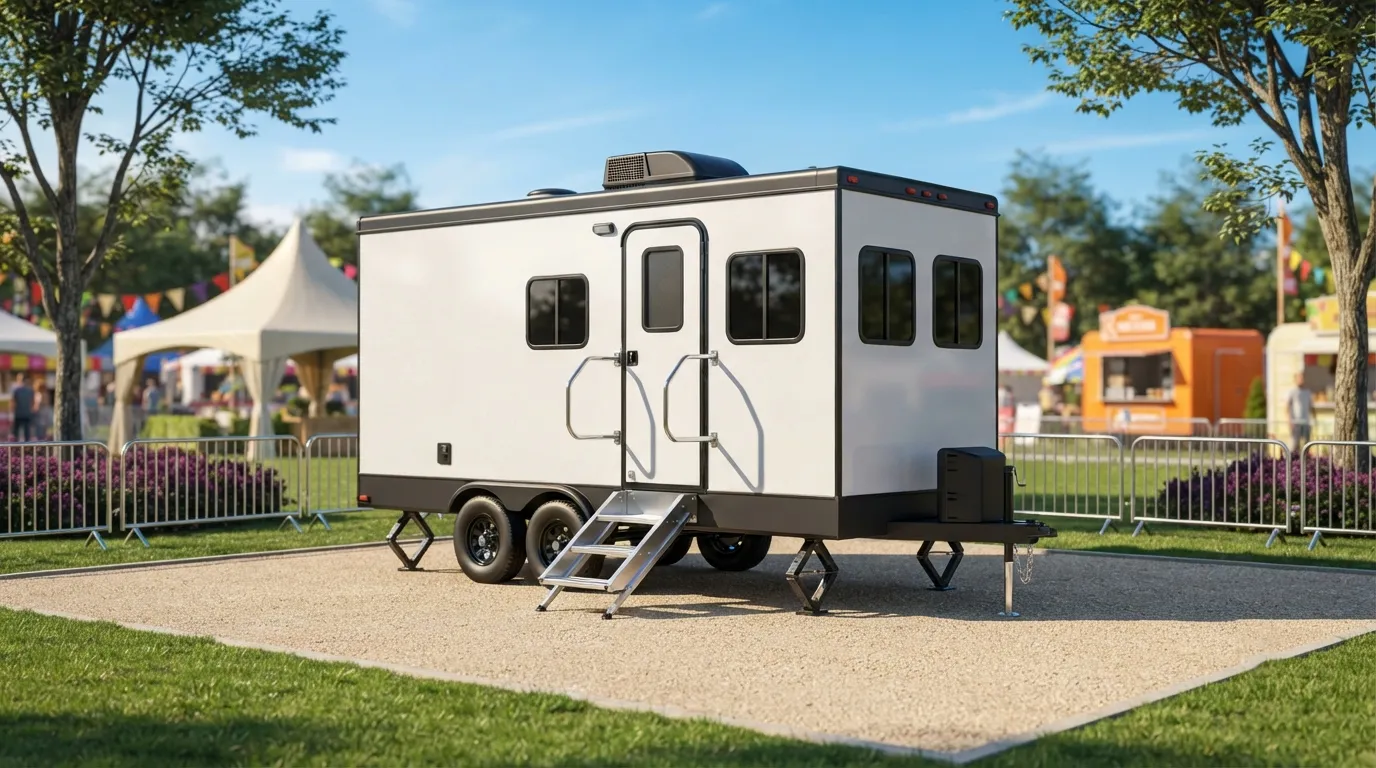
An accessible unit needs a 60 inch turning circle inside per ADA Standards section 304.3.1, a 32 inch clear door opening under section 404.2.3, and a 36 inch clear path leading to it per section 403.5.1. That means the approach path matters as much as the pad itself: no parked equipment, no hose reels, no dumpster corner cutting the route short. See ADA restroom requirements for the full list, and price it against a standard unit using porta potty rental cost. If you are running a larger event and considering a restroom trailer rental instead, the same approach-path rule applies at the ramp, which under ADA Standards section 405.2 cannot run steeper than 1:12. Corona events near Eastvale, 8.7 miles north, or Norco, 5.2 miles north, often split ADA units across two clusters rather than one, so guests are never more than a short walk from an accessible door no matter where they enter the lot.
| unit | day | week | month |
|---|---|---|---|
| standard | 100-350 | 130-500 | 125-325 |
| ada | 200-400 | 120-240 | - |
| deluxe | 85-1200 | 150-290 | - |
Can I place a porta potty on grass or dirt?
Yes, if it is dry and reasonably level. Wet grass lets units sink and tip after a few days of use. Packed dirt works well. Corona Porta Pros sets plywood under legs on soft ground when needed, at no charge for standard placement.
Does a septic system affect where I place a holding tank or unit?
Yes, keep units and tanks clear of the septic leach field. A typical residential tank gets pumped every 3 to 5 years depending on size and household use. If you are near Corona and need service instead, a nearby option like Placerville septic pumping service follows the same field-clearance rule.
How far from a building entrance should a unit sit?
Close enough to walk in under a minute, far enough that odor and door swing do not block the entrance. Ten to twenty feet is typical. Keep the path clear per ADA Standards section 403.5.1 if accessible units are on-site.
What if my site has no flat ground at all?
Corona Porta Pros can grade a small pad or recommend a base mat for slight slopes. Steep grades need a different spot entirely, since a tipped unit is both a mess and a hazard nobody wants mid-project.
Do I need a permit for a unit on my own driveway?
No, private property placement generally does not require a permit. Anything touching a public street, sidewalk or right of way in Corona needs confirming with the city first, since rules vary by exact location.
Next step
Get a delivery date
Tell us the address, the dates and the headcount. We size the order and confirm the route.